LEAD
PRODUCT DESIGNER

fl3ws

design

AI

NATIVE

WORKS

Metagood

WEB 3 / RWA

2026

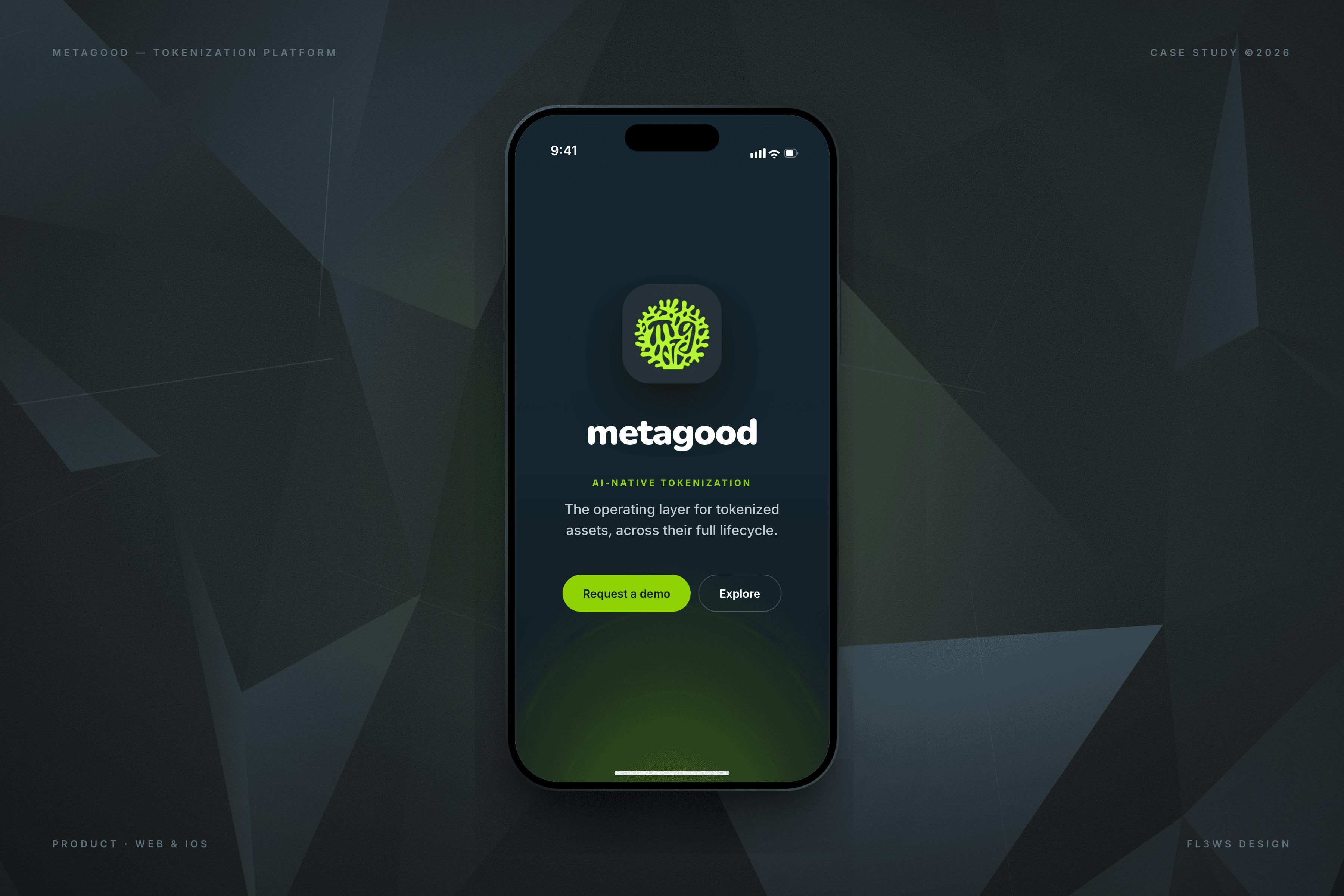
Bringing Real-World Assets On-Chain Without Compromise Metagood is the operating layer for tokenized real-world assets, managing the full asset lifecycle from compliance and transfer rules through entitlements, corporate actions, and audit. The design challenge was unique: translating the rigour and trust of institutional finance into a digital experience that feels modern, intuitive, and unmistakably credible. Beyond Tokenization: Infrastructure Investors Can Trust Metagood is more than a tokenization tool. It's a complete operational backbone where compliance isn't an afterthought, it's woven into every interaction. From investor onboarding to transfer restrictions and audit trails, the platform balances regulatory complexity with clarity, ensuring institutions and investors alike experience a seamless, trusted journey through the world of tokenized assets. Leading Design from First Sketch to Working Demo I led the design end-to-end from the earliest drafts through to a fully working demo. This meant shaping not just how the product looked, but how it was built: contributing to the architecture of the platform both visually and structurally, so that the design system and the product's underlying logic evolved hand in hand. Complex workflows, compliance, entitlements, corporate actions were mapped and refined into interfaces that make institutional-grade processes feel effortless. From Figma to Functional: A Vision Realized Designs were crafted and iterated in Figma, then brought to life as a working demo using Claude Code collapsing the traditional gap between design and build. The result is a polished, high-fidelity platform that embodies Metagood's brand identity and core values: not just static screens, but a living product that demonstrates exactly how confident, intuitive tokenized finance should feel.

Nano.fi

Web3 / DeFi

2026

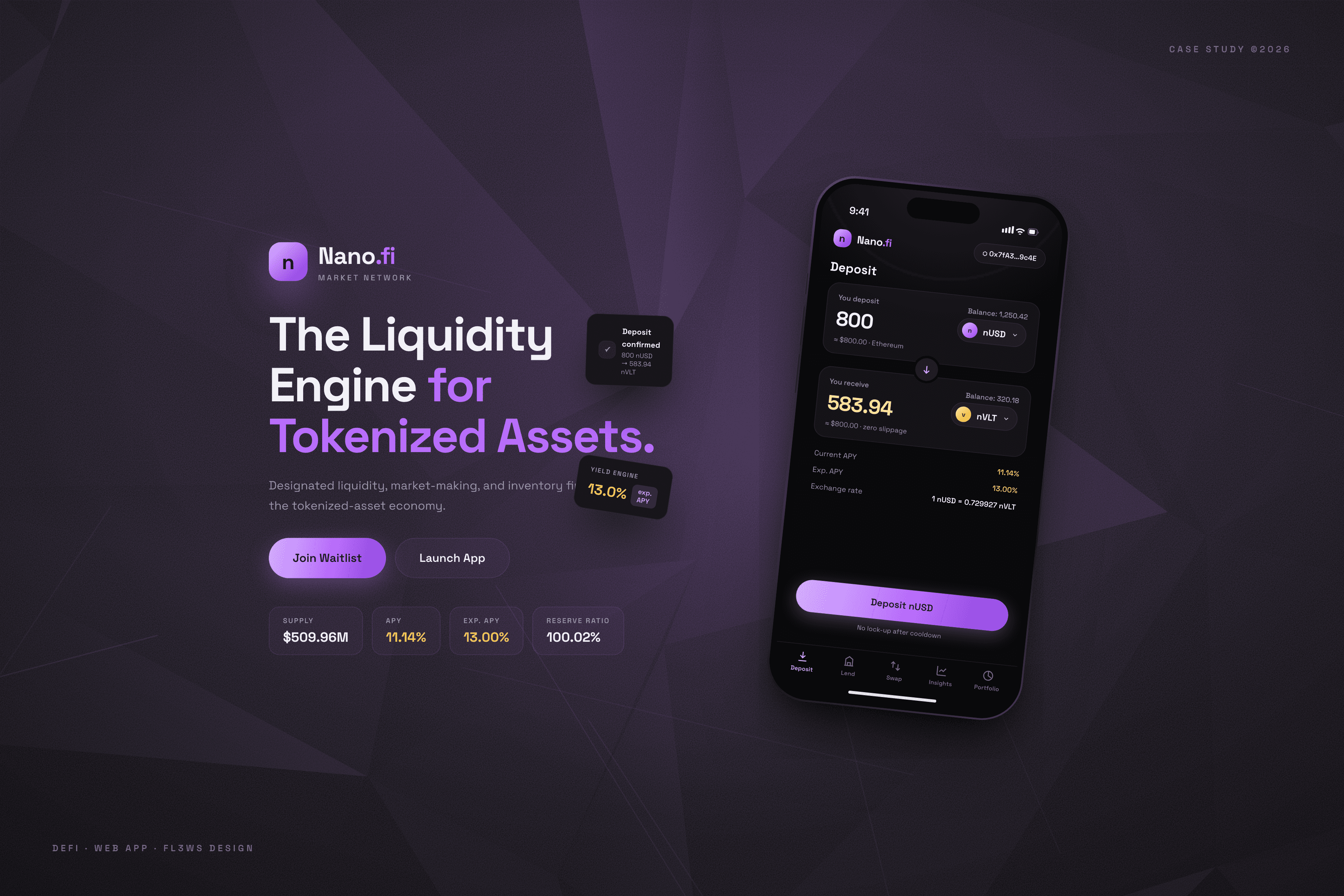
The Liquidity Engine for Tokenized Assets Nano.fi is the liquidity engine for the tokenized-asset economy providing designated liquidity, market-making, and inventory finance for issuers, market makers, and digital asset treasuries. The design challenge: tokenization is bringing treasuries, credit, equities, and real estate on-chain, but issuance alone doesn't create markets. Nano.fi needed a visual identity and product experience that could make this missing layer feel tangible, credible, and inevitable. Beyond Issuance: A Crypto-Native Market Maker Nano.fi is more than a protocol, it's a complete market infrastructure. A three-token architecture separates stable settlement, yield-bearing participation, and governance, while specialized liquidity vaults isolate risk by asset class, from tokenized T-bills to private credit and alternative assets. The design had to communicate this layered complexity with absolute clarity: low-risk capital never mixes with high-risk collateral, and every screen needed to reinforce that discipline. Leading Design and Planning from Concept to Production I led both the design and the product planning, shaping Nano.fi's structure, narrative, and visual language from the first drafts. The deep-purple, dark-mode aesthetic was crafted to feel premium and crypto-native while borrowing the gravitas of institutional finance: precise typography, modular card systems, and a restrained accent palette that lets dense financial concepts breathe. Complex mechanics, vault architecture, operator obligations, token roles were distilled into scannable, self-explanatory layouts. A Clickable Product, Ready to Ship Using Claude Code, I built the landing page and the full platform front end as a working, clickable product, not a static mockup, but a deploy-ready build handed directly to developers for review and release. The result collapses the gap between design vision and shipped software: a polished, high-fidelity experience that embodies Nano.fi's positioning and proves the product before a single line of backend code is written.

Astra

WEB3

2025

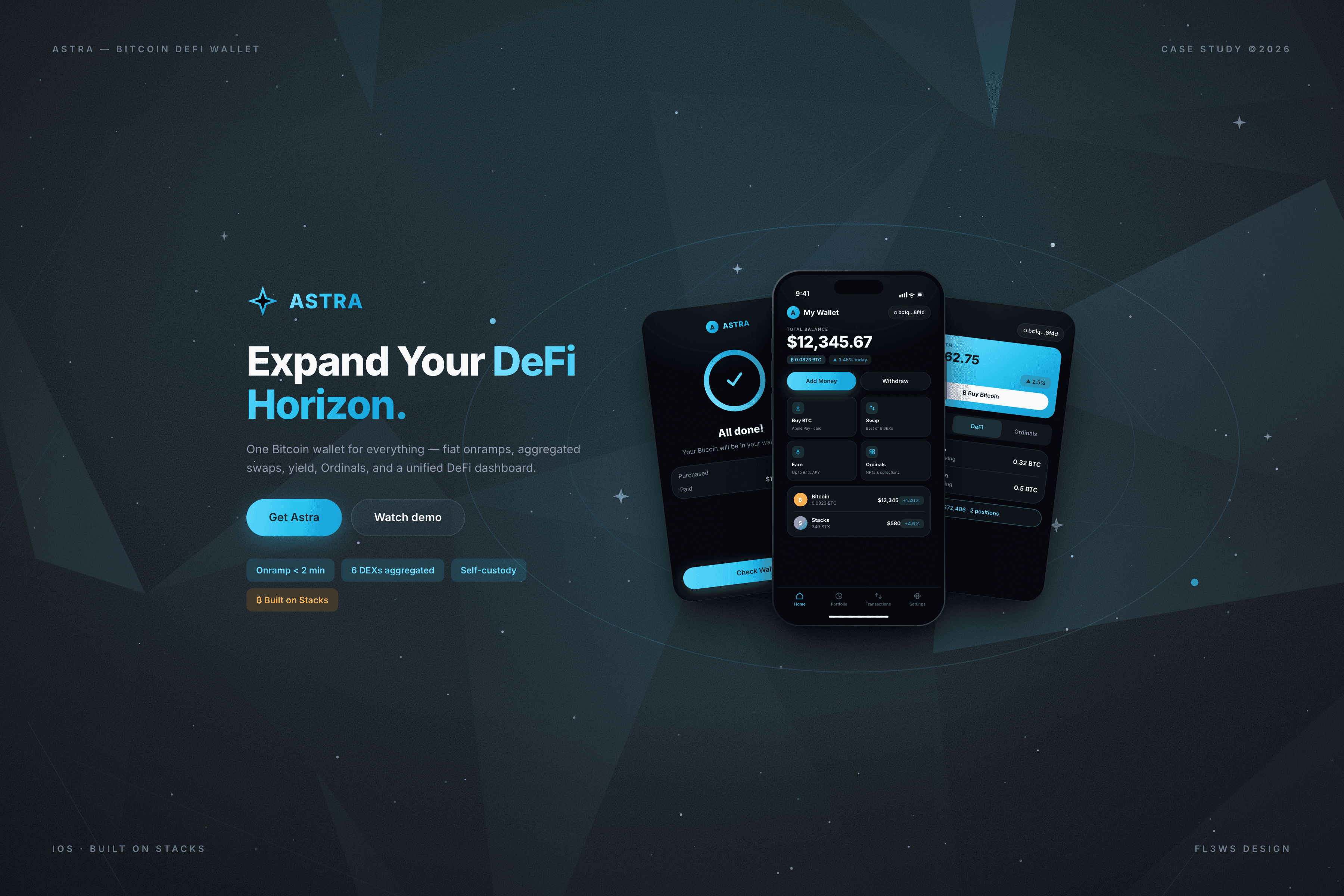
DeFi Made Easy Built for Bitcoin Astra is a Bitcoin DeFi super app, a unified wallet bringing fiat onramps, DeFi, trading, and Ordinals together in one mobile-native experience. The design challenge was rooted in a real gap: while Ethereum and Solana users enjoy polished wallets like MetaMask and Phantom, Bitcoin's ecosystem remains fragmented across scattered services, with no single platform for buying, managing, and growing BTC. Astra was conceived to be that missing platform. Beyond a Wallet: Bitcoin's First Super dApp Astra is more than a place to hold Bitcoin. It unifies fiat onramps (Apple Pay, card, bank transfer), a DeFi dashboard aggregating swaps, lending, and yield across Bitcoin L2s, native Ordinals and NFT support, and self-custody with social recovery, no seed phrase required. The design had to make this breadth feel effortless: a single, scannable home for an ecosystem that has never had one. From Concept to Brand to Product I led the project from the ground up, concept, planning, and design. This began with strategy: defining the problem space, mapping the competitive landscape, and shaping the product vision and pitch. It extended through naming and brand identity, exploring directions before landing on Astra, with its star-inspired mark and electric-blue-on-dark visual language and into the full mobile UI: onboarding, the three-step onramp flow, the unified Tokens / DeFi / Ordinals dashboard, and portfolio views, all crafted in Figma with a crisp, confident dark aesthetic built for clarity at a glance. A Vision Realized: Pitch-Ready and Demo-Backed The final output went beyond static design, a complete investor-ready pitch covering product, market opportunity, monetization, and roadmap, paired with high-fidelity mobile designs and a working dev demo that proved the core flows in practice. The result: a fully formed product vision, from first idea to brand to clickable experience, demonstrating exactly how seamless Bitcoin DeFi can be.